What it takes to keep an AI system useful
Plan for changing inputs, integrations, human review, and a clear owner after delivery.
Austin Tanner
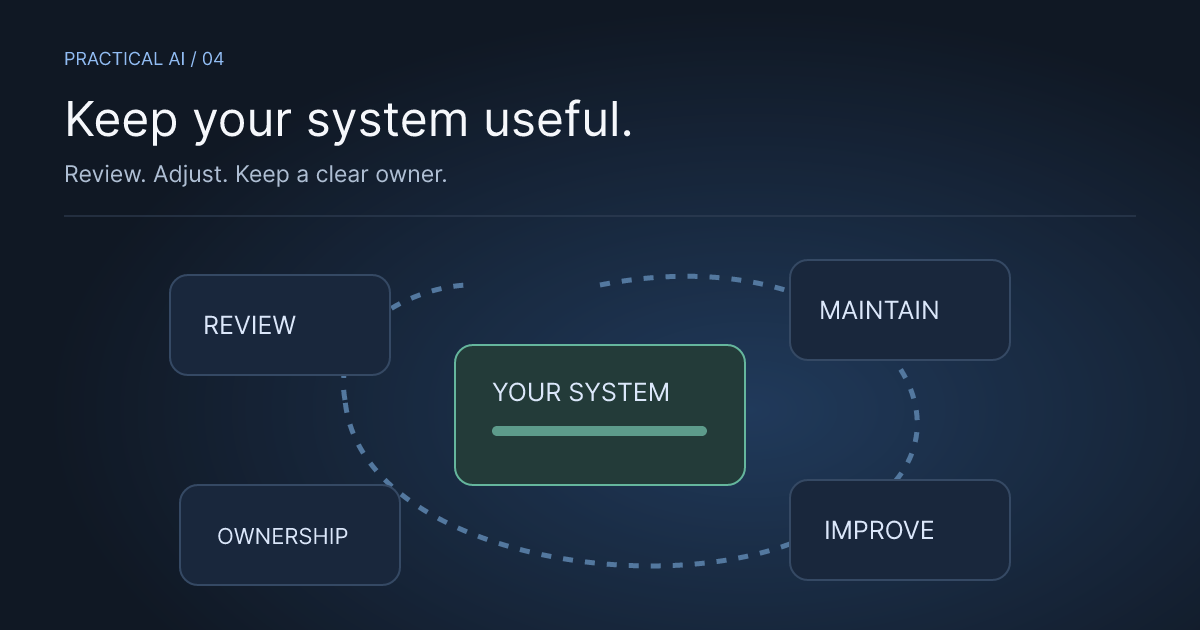
Deploying an AI workflow is the beginning of operating it. The inputs, tools, and people around it can change. A maintenance plan should describe how you notice problems and what you do next.
Keep a small set of checks
Save representative test cases and the results you expect. Include missing information, unusual formatting, and cases that should be handed to a person. Review these checks when changing a prompt, model, integration, or business rule.
Do not rely only on whether a request completed. An output can arrive successfully and still be wrong. Inspect a sample of the actual work and keep a way to report a correction.
Watch the whole workflow
An inbox rule, expired credential, changed form, or unavailable API can interrupt an otherwise useful system. Agree on what is logged, who sees failures, and how work reaches a person when a connection fails.
Keep logs proportionate to the task. Avoid collecting sensitive data just because it is easy to record. Decide what needs to be retained to investigate a problem, and for how long.
Know how to pause and recover
Document a manual fallback and a way to stop the automated step. Keep track of which items were already processed so a retry does not create duplicate records or messages.
For changes, keep a record of what changed and how it was checked. A rollback plan is more useful when someone has actually walked through it.
Define support before you need it
A support agreement should specify covered systems, response expectations, maintenance work, and how new requests are quoted. Access to advice is different from continuous human monitoring.
In Vibe Deck, the underlying coding tools can change independently of the workspace. That makes compatibility and clear ownership part of keeping the product useful.
My implementation engagements include an agreed handoff. Ongoing support is optional and separately scoped.