How to choose AI tools for a small business
A practical way to compare AI tools using your own tasks, data, and budget.
Austin Tanner
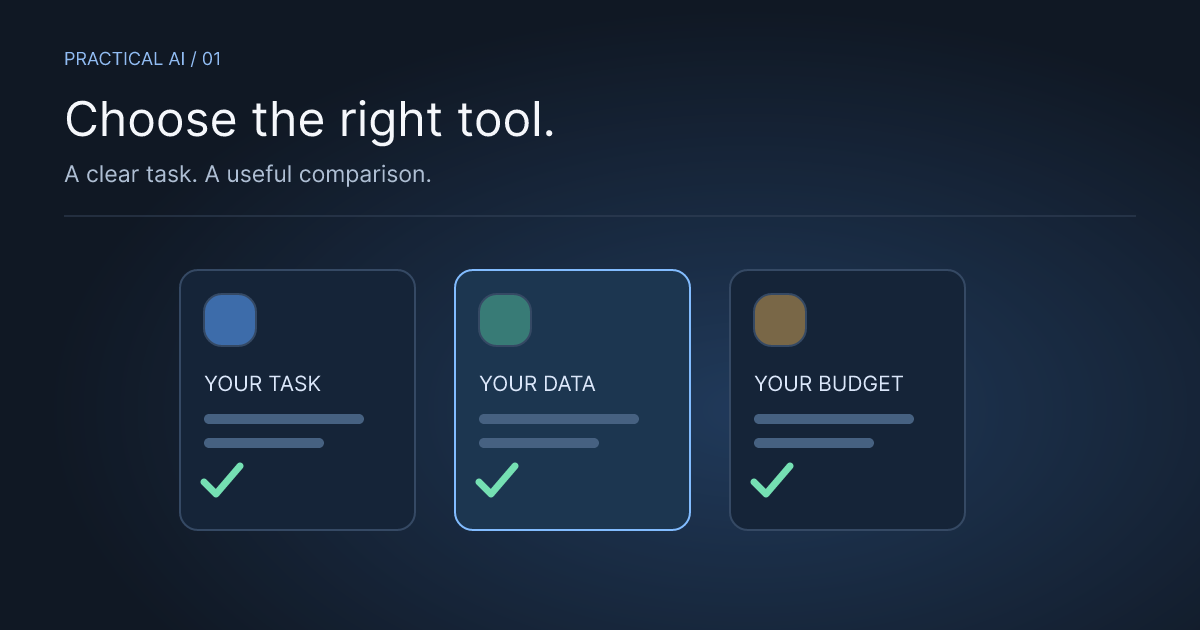
Start with a task you can describe in a sentence. “Help me organize incoming requests” is a better starting point than “We need AI.” It gives you something concrete to test.
Write down what a useful result looks like
Choose a handful of representative inputs. Include ordinary cases and a few awkward ones: an incomplete message, a long document, or an inquiry that should go to a person. Write down what you would accept as a good response before trying a tool.
You do not need a complicated score. Track whether the output is correct, whether you can verify it, and how much correction it needs. A fast first draft can still create extra work if checking it takes longer than doing the task.
Compare the whole workflow
Look beyond the generated answer. Can your team get the information into the tool? Can approved work get back into your existing systems? Who manages access? What happens when the result is wrong?
Use sample or anonymized records while exploring. Before introducing business data, check the provider’s current terms, retention settings, and account controls. Those details can vary by product and plan.
Make costs visible
Separate subscription fees from usage charges, setup, integration work, and the time spent reviewing output. Note which assumptions depend on task volume. A trial should help you understand those costs rather than hide them behind a single attractive example.
Decide what to do next
After your trial, choose a small next step: adopt the tool for a defined task, test another approach, or keep the current process. “No change for now” is a valid result.
In SayNovo, my own website product, the editing workflow keeps the website visible so an owner can inspect the change. That same principle is useful when evaluating any AI tool: make the result easy to check.
If you want help comparing options, AI consulting can be a standalone engagement. We can work through your task and leave you with a practical recommendation.