How to choose your first business automation
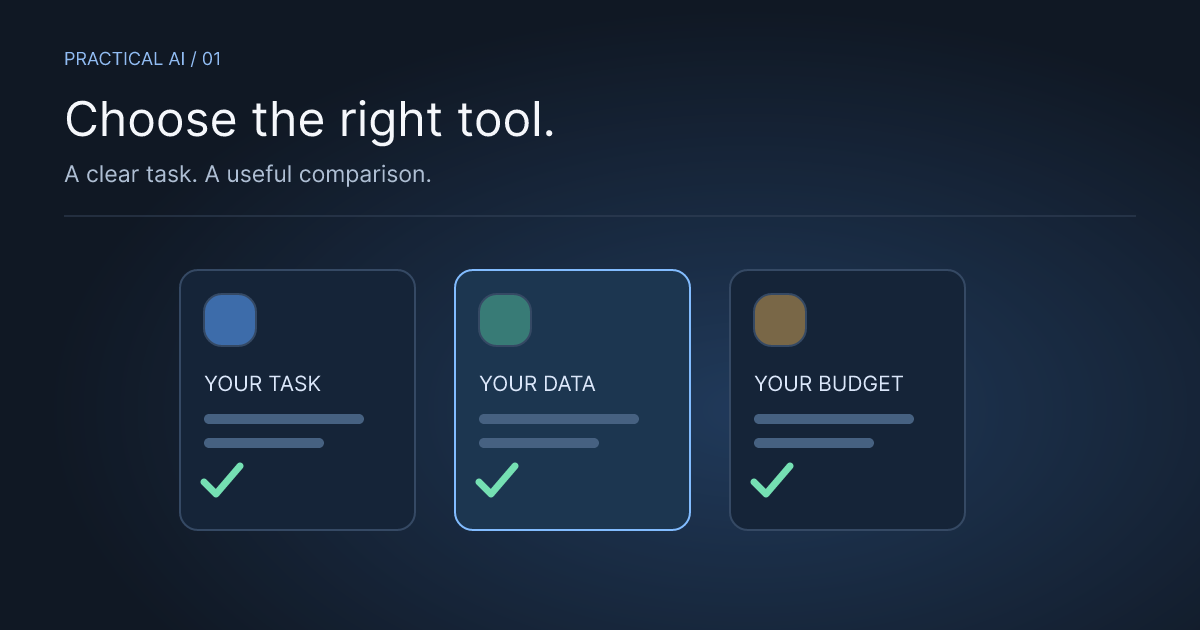
Choose a bounded workflow with clear inputs, a human reviewer, and an observable result.
Austin Tanner
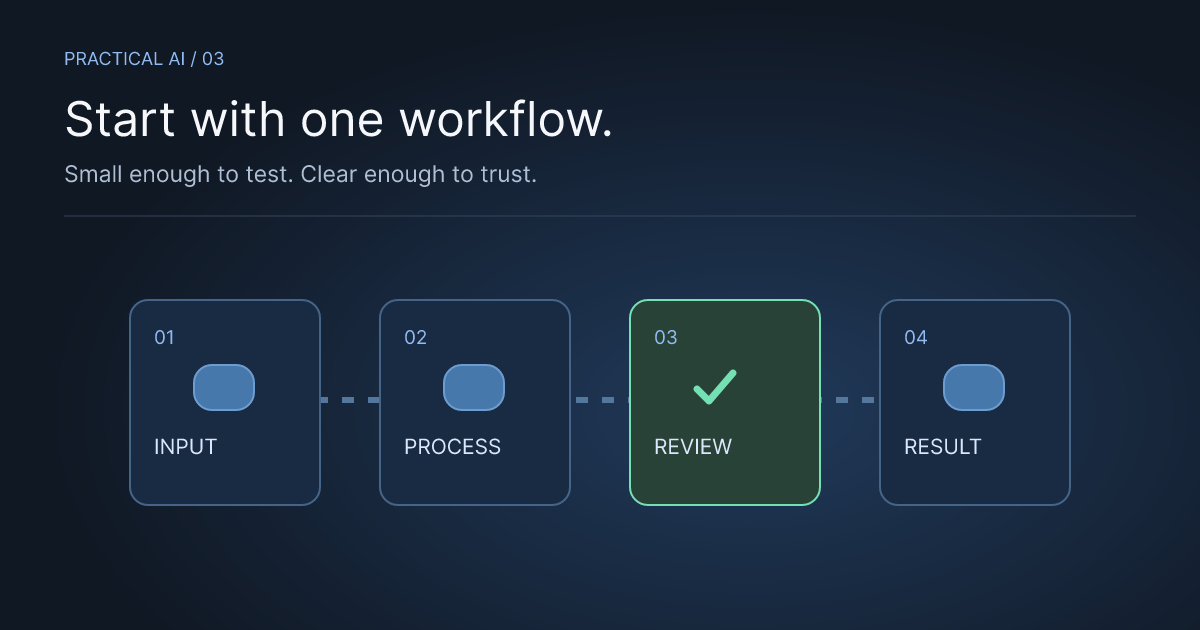
Your first automation should be easy to explain, inspect, and stop. Choose work that repeats often enough to learn from, with inputs you can access and an output someone already knows how to check.
Map one task before choosing technology
Write the steps in their current order. For each step, identify the person responsible, the information they use, and where the result goes. Look for repeated copying, sorting, or preparing drafts.
Separate decisions from preparation. An AI system might extract fields from an invoice, while a person checks them before a record is saved. That is a more manageable first scope than allowing a system to receive an invoice, approve it, and pay it.
Include exceptions in the scope
What happens when a document is unreadable, a field is missing, or an integration is unavailable? A useful workflow has somewhere for these cases to go. Define a review queue or a clear handoff to a person.
Keep the original input alongside the proposed result when practical. It makes checking easier and gives you a way to investigate mistakes.
Establish a baseline
Observe the task before changing it. Record how many items arrive, how long processing takes, and what errors need rework. Use enough examples to include ordinary variation. Avoid predicting a percentage saving from a single easy case.
Run the new workflow on a limited set of representative inputs. Compare the total work, including review and corrections, with your baseline.
Agree on an owner
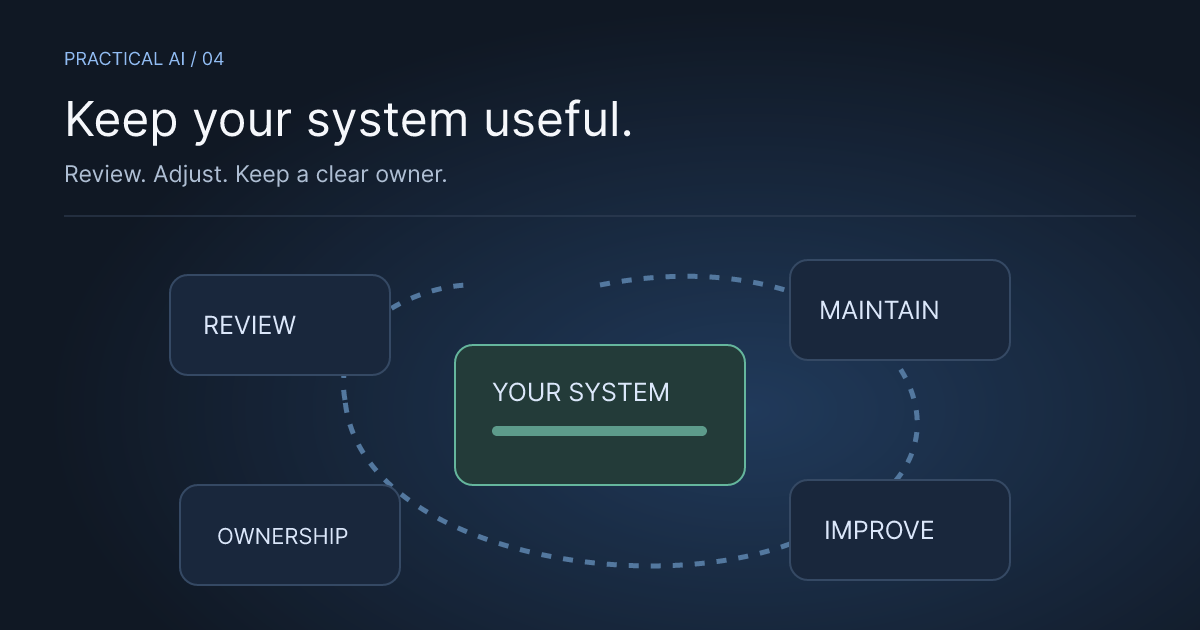
Name the person who will review exceptions, notice failures, and decide when to stop the system. Document the fallback process. A tool that only its builder understands is harder to hand over.
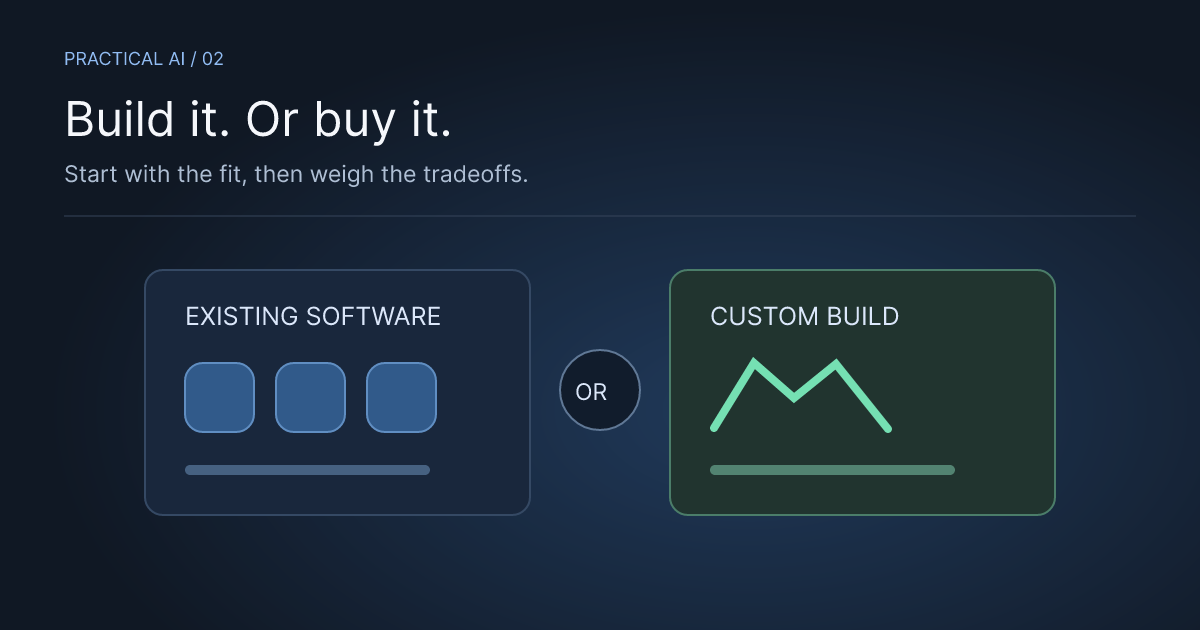
For an example of solving a focused problem, Vibe Deck brings several coding sessions into one workspace. Start with the specific friction, then decide how much software you actually need.
For a first build, AI implementation can focus on one workflow, with testing and a documented handoff.